
Good brakes are absolutely essential for safe driving. The easy way to visualize the difference between disc and drum brakes is that a disc brake pinches and a drum brake pushes. The disc brake caliper forces a pair of brake pads to pinch a rotating disc. The drum brake wheel cylinder pushes a pair of brake shoes out against the inside of the spinning steel drum.
Both Disc and Drum brakes will decrease speed via turning friction into heat. The key to all this speed slowing action is uncompressible hydraulic brake fluid. Applying the brake pedal pushes this fluid up against sealed pistons inside the calipers and wheel cylinders. The problem is that brake fluid attracts moisture by its very nature of being hygroscopic. This moisture eats into the steel of the caliper or wheel cylinder and the hydraulic seal is lost. Brake failure can be the result.
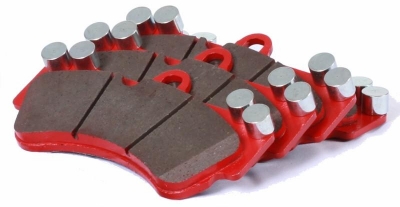
Let us first look at the basic parts of a brake system. The pads or shoes are the friction material. When the brakes are applied this is the part that makes contact with the rotor or drum, creating friction and stopping the car. This friction causes the pad or shoe to wear. The pads are moved by hydraulic pressure, created in the master cylinder, pushing brake fluid through the brake lines and pushing out a hydraulic piston attached to the pad or shoe. In a disc brake system this cylinder is found in the caliper. In a system with drum brakes it is found in the wheel cylinder.
Trying to save a few dollars on brakes could cost you your life!
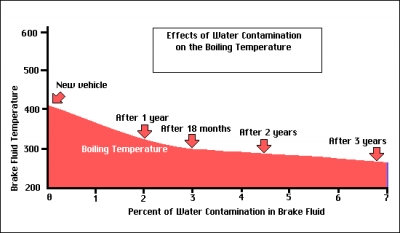
Brake Fluid Most Vital, yet often overlooked.
The brake system of motor vehicles needs to be properly maintained. While many motorists are aware that their brake pads wear over time, many fail to realise that their brake fluid also degrades over time and needs to be regularly changed in accordance with the vehicle manufacturer's recommendations.
Brake system contamination is inevitable due to the imperfect sealing of the system against moisture. Many brake problems can be traced to air or contamination of the hydraulic fluid. Leaks at fittings where lines and hoses connected to the master cylinder, callipers and or wheel cylinders can allow air to enter the system, as can corrosion through brake lines. Air can also appear after moisture gets into the fluid and boils, giving off steam. Two signs of air in the brake fluid are a noticeable decrease in brake performance and a spongy pedal that quickly and nearly effortlessly goes to the floor as air compresses easier than fluid.
Some warning signs of brake problems are:
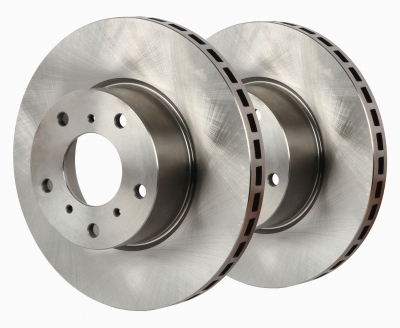
Disc Rotor Minimum Thickness:
Rotor Minimum Thickness is determined by the motor Vehicle Manufacturer during the initial vehicle design.
Continued operation at or below Minimum Thickness can lead to Brake system failure. As the rotor reaches its minimum thickness, braking distance increases, sometimes up to 4 meters! Disc Brake Rotor Minimum Thickness (also known as Scrap Thickness) is the minimum safe working thickness of a rotor at which it must be replaced.
A brake system is designed to take kinetic energy and transfer it into heat energy. This heat energy is created by the driver when the brakes are applied. Driver foot force is boosted then converted into hydraulic pressure which forces the piston to move inside the caliper. The piston movement forces the brake pads in contact with the spinning rotor. Rubbing between the brake pads and the brake rotor generates heat which is then dissipated by convection (ie hot air rising from the surface of the disc rotor) into the atmosphere.
Drum Brakes are often found only at the rear of the vehicle. Like the disc brake, the drum brake has two brake shoes and a piston. But the drum brake also has an adjuster mechanism, an emergency brake mechanism and lots of springs. When you apply the brake pedal, hydraulic pressure from the master cylinder pushes the two pistons inside each wheel cylinder outwards to force the brake shoes against the drums and apply the brakes.. That's pretty straightforward, but why do we need all of those springs? This is where it gets a little more complicated. Many drum brakes are self-actuating. That is as the brake shoes contact the drum, there is a kind of wedging action, which has the effect of pressing the shoes into the drum with more force. The extra braking force provided by the wedging action allows drum brakes to use a smaller piston than disc brakes. But, because of the wedging action, the shoes must be pulled away from the drum when the brakes are released. This is the reason for some of the springs. Other springs help hold the brake shoes in place and return the adjuster arm after it actuates.
The two most common problems with brake drums are worn out brake shoes and leaking wheel cylinders. Because of their hidden location inside the brake drums, wheel cylinders cannot be visually inspected unless the drums are removed. Usually this leak is discovered during a service or when changing or adjusting the rear brake shoes, when drum removal reveals an unholy mess of wet brake shoe and brake dust along with more work than previously planned for. The moisture trapped in the brake fluid has literally eaten away at previously smooth walls of the wheel cylinder and brake fluid has escaped past rubber piston seal.
To prevent this situation from occurring in the first place regular brake fluid flushes are required. Corrosion won't ever take hold.
|
|
238 Newnham Rd, Mt Gravatt QLD 4122
(07) 3343 5722
This email address is being protected from spambots. You need JavaScript enabled to view it.
Monday-Friday 7:30am to 5:00pm